The literary technique known as stream of consciousness is a narrative mode that seeks to capture the unfiltered, chaotic, and often non-linear flow of a character’s thoughts and feelings. Emerging primarily in the early twentieth century as a hallmark of the Modernist movement, this style marked a profound break from traditional, linear storytelling. Its goal is to provide a direct and intimate window into the human mind, reflecting not just what a character thinks, but the very way in which they think, with all its aphasic, associative, and fragmented nature. The phrase itself was coined by the psychologist William James in his 1890 work, The Principles of Psychology, where he described human thought as a continuous “river or stream.” Writers in the following decades adopted this concept, viewing it as a more authentic and truthful way to represent psychological reality than conventional narrative forms.
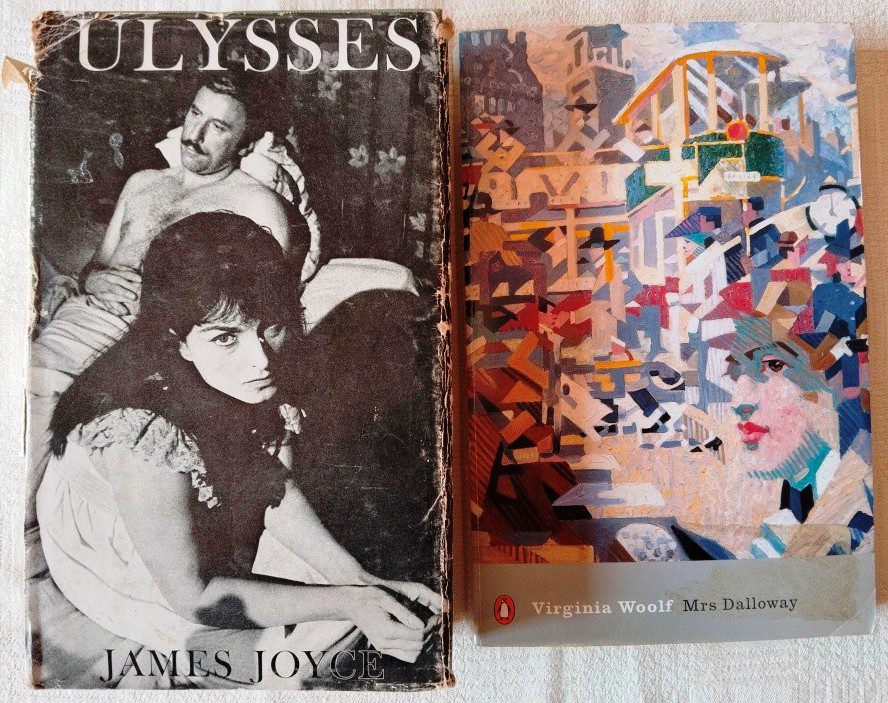
One of the most celebrated and influential practitioners of this technique was Virginia Woolf. In novels such as Mrs. Dalloway and To the Lighthouse, Woolf employs a lyrical and associative style, gliding seamlessly from the mind of one character to another, often without clear transitions. Her stream of consciousness is elegant and poetic, capturing fleeting impressions, sensory details, and deep emotional resonance. In Mrs. Dalloway, for instance, the narrative follows Clarissa Dalloway and a cast of other Londoners over the course of a single day. Woolf’s technique allows the reader to experience the world through each character’s inner life, from Clarissa’s poignant reflections on her past to Septimus Smith’s harrowing trauma. This approach creates a tapestry of interconnected thoughts that collectively reveal a profound sense of the inner landscape of her characters.
The technique was pushed to its most ambitious and experimental limits by James Joyce. In his masterpiece, Ulysses, Joyce meticulously chronicles the thoughts of his characters—Leopold Bloom, Stephen Dedalus, and Molly Bloom—over the course of a single day in Dublin. While Woolf’s approach is often seen as a gentle, flowing river, Joyce’s can be described as a turbulent and roaring rapids. His use of stream of consciousness is far more raw and visceral, incorporating slang, puns, and deeply personal associations that can be challenging for the reader. The novel’s final chapter, “Penelope,” is a single, lengthy monologue from Molly Bloom that famously contains no punctuation, presenting a radical and unfiltered depiction of her memories, desires, and observations. This passage is the definitive example of stream of consciousness, demonstrating how the technique could be used to deconstruct language itself to access the very essence of human thought.
The stylistic demands of stream of consciousness can present significant challenges for the reader. The absence of traditional narrative markers—such as clear transitions, linear time, and conventional punctuation—can lead to a sense of disorientation. Readers must actively piece together connections between seemingly random thoughts, memories, and sensory impressions, which requires a high degree of focus and interpretive effort. This deliberate ambiguity and lack of authorial guidance place a greater burden on the reader to infer meaning and establish character motivations from fragmented, psychological data rather than a straightforward plot. For this reason, works by authors like Joyce can be difficult and even frustrating for those unaccustomed to the technique, as the reading experience mirrors the often-confusing and associative nature of actual thought.
Although it is most associated with the Modernist period, the stream of consciousness technique has continued to evolve and appear in contemporary literature, often in a more subtle or blended form. Authors like Cormac McCarthy use it to create a sparse, visceral experience in novels such as The Road, where the inner thoughts of the characters are fragmented and tightly bound to their immediate environment and desperate circumstances. Similarly, Zadie Smith employs a more expansive and digressive form of the technique in works like White Teeth, weaving in tangential thoughts, memories, and cultural references to build complex character portraits and explore themes of identity and multiculturalism. While these contemporary examples may not be as radical as Joyce’s “Penelope” chapter, they demonstrate the lasting power of the technique to create psychological depth and complexity.
The enduring legacy of stream of consciousness writing is its ability to deepen the reader’s understanding of character and to explore the complexities of subjective experience. By abandoning traditional plot structures, writers like Woolf and Joyce demonstrated that the most significant human dramas often unfold not in grand external events, but within the confines of the mind. While its most extreme forms were a product of the Modernist era, the technique has since influenced countless authors who have found more subtle ways to integrate inner monologue and psychological realism into their work. In doing so, it has permanently expanded the possibilities of narrative, reminding us that every story has a complex inner dimension waiting to be explored.